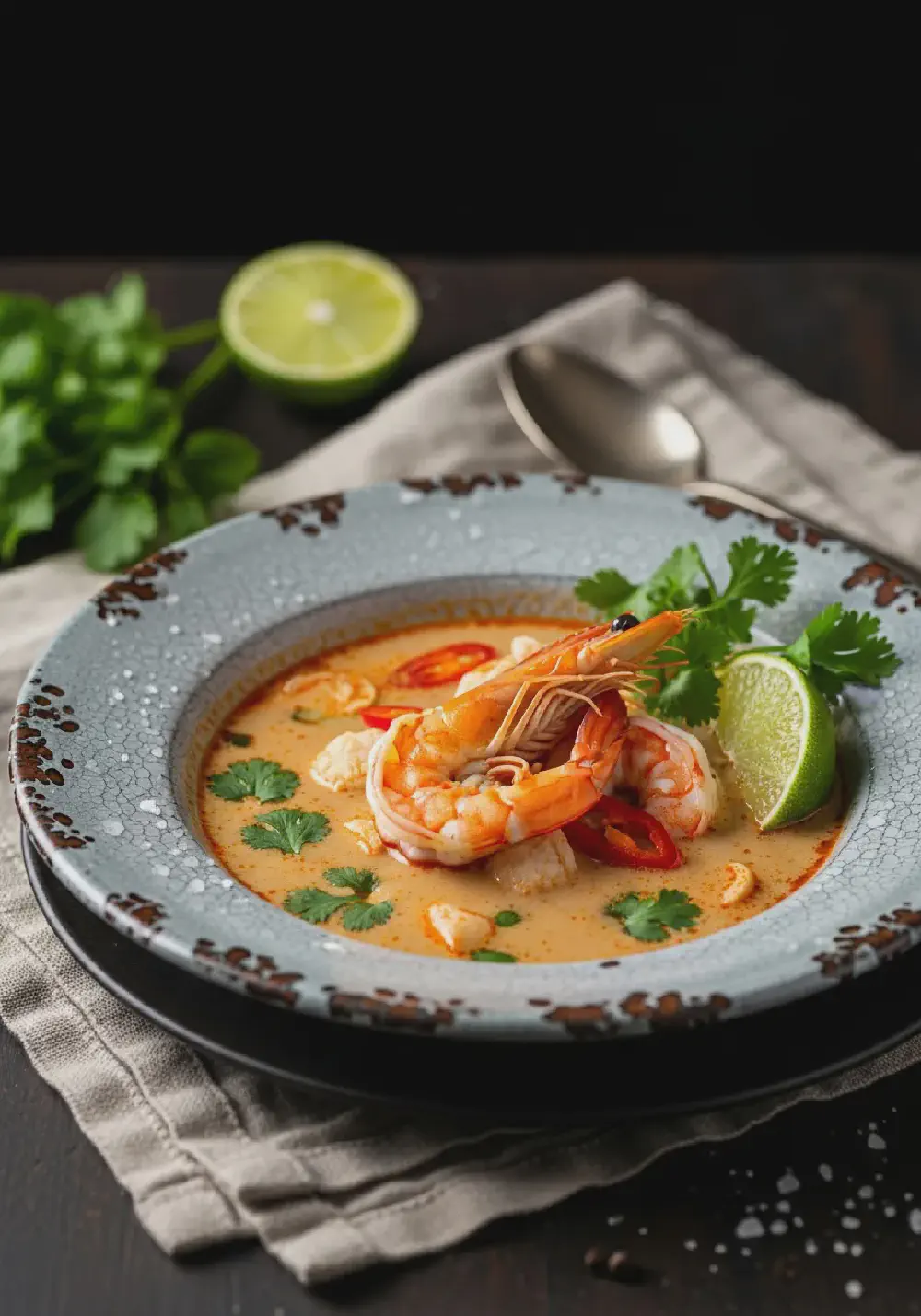
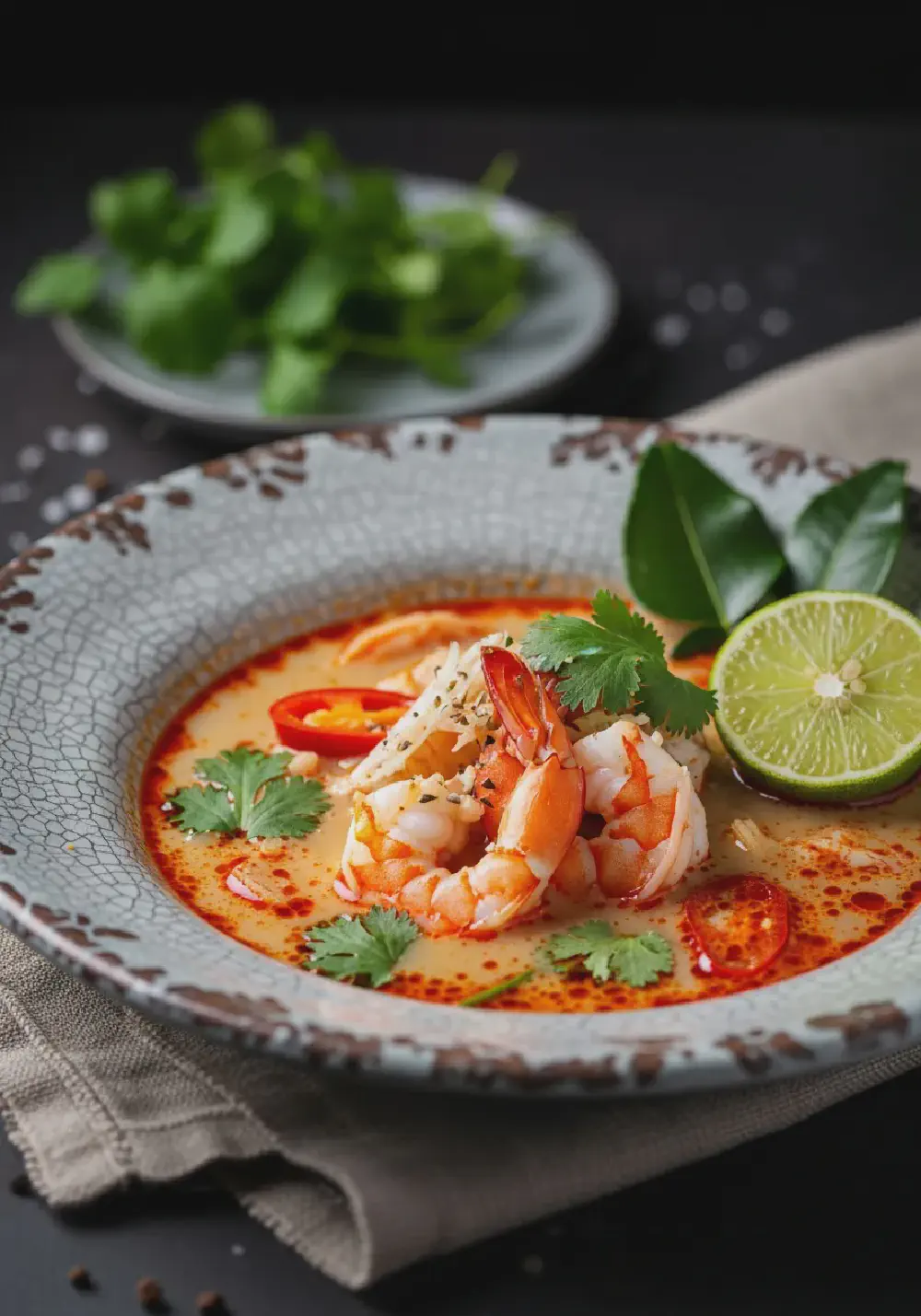
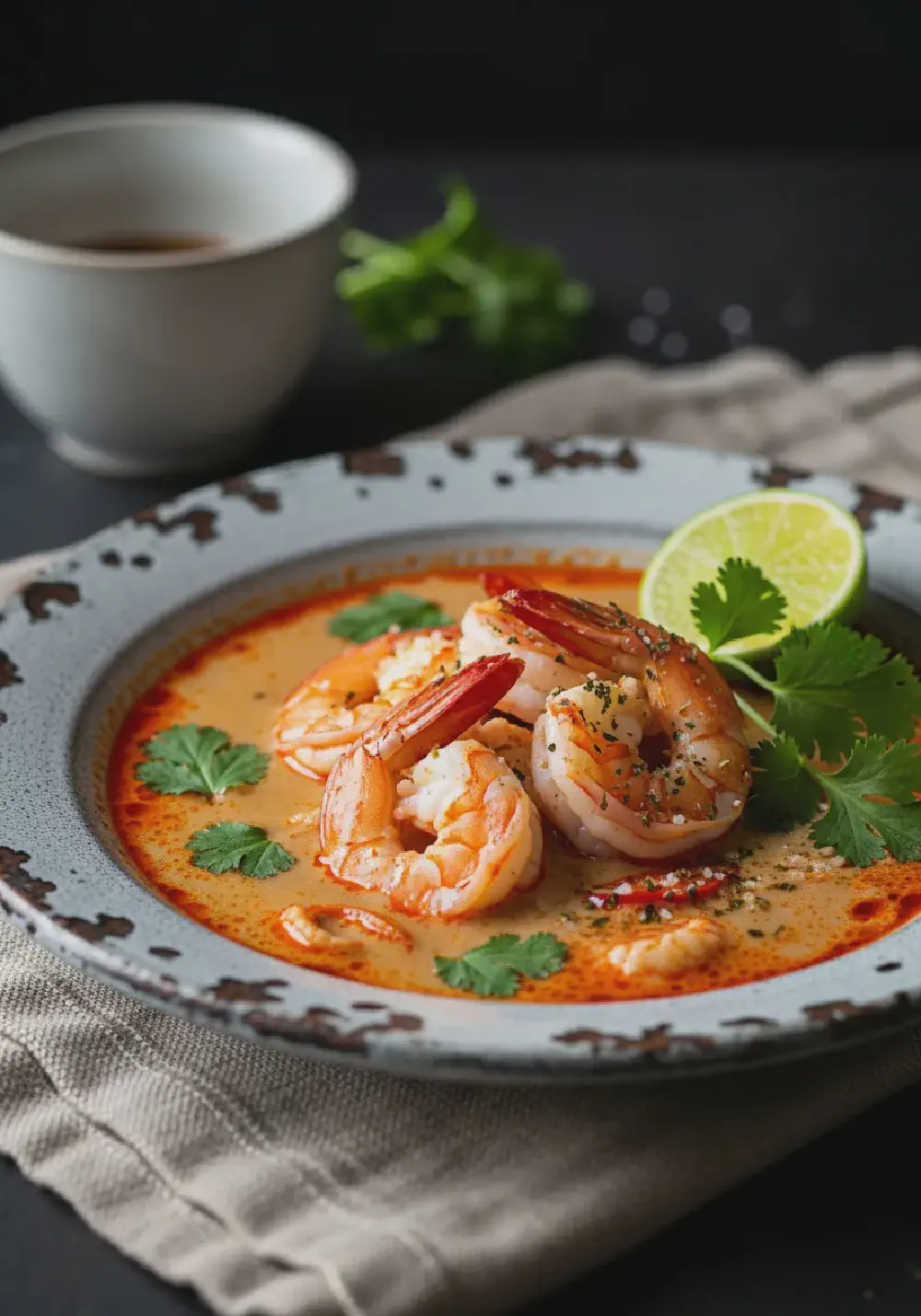
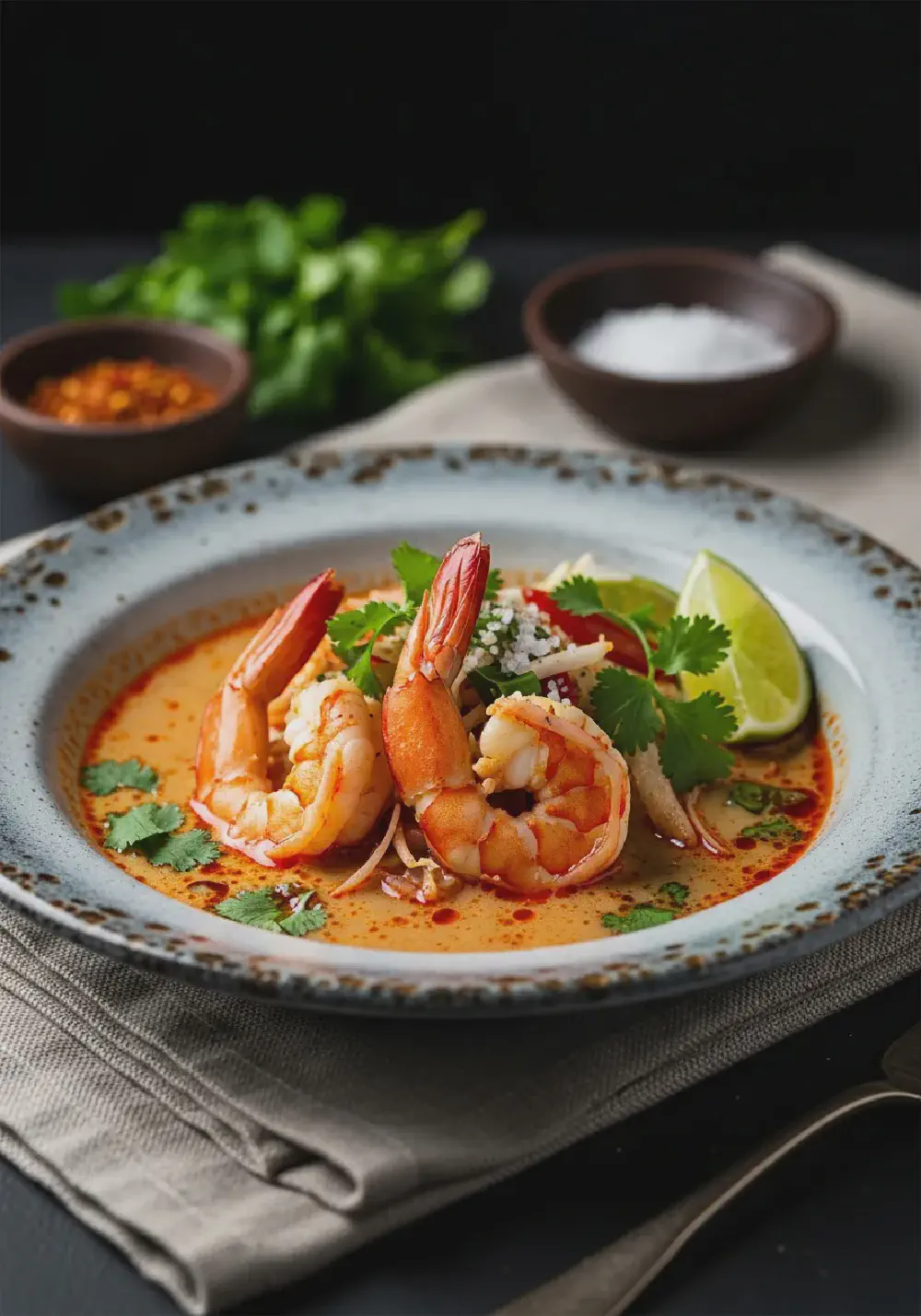
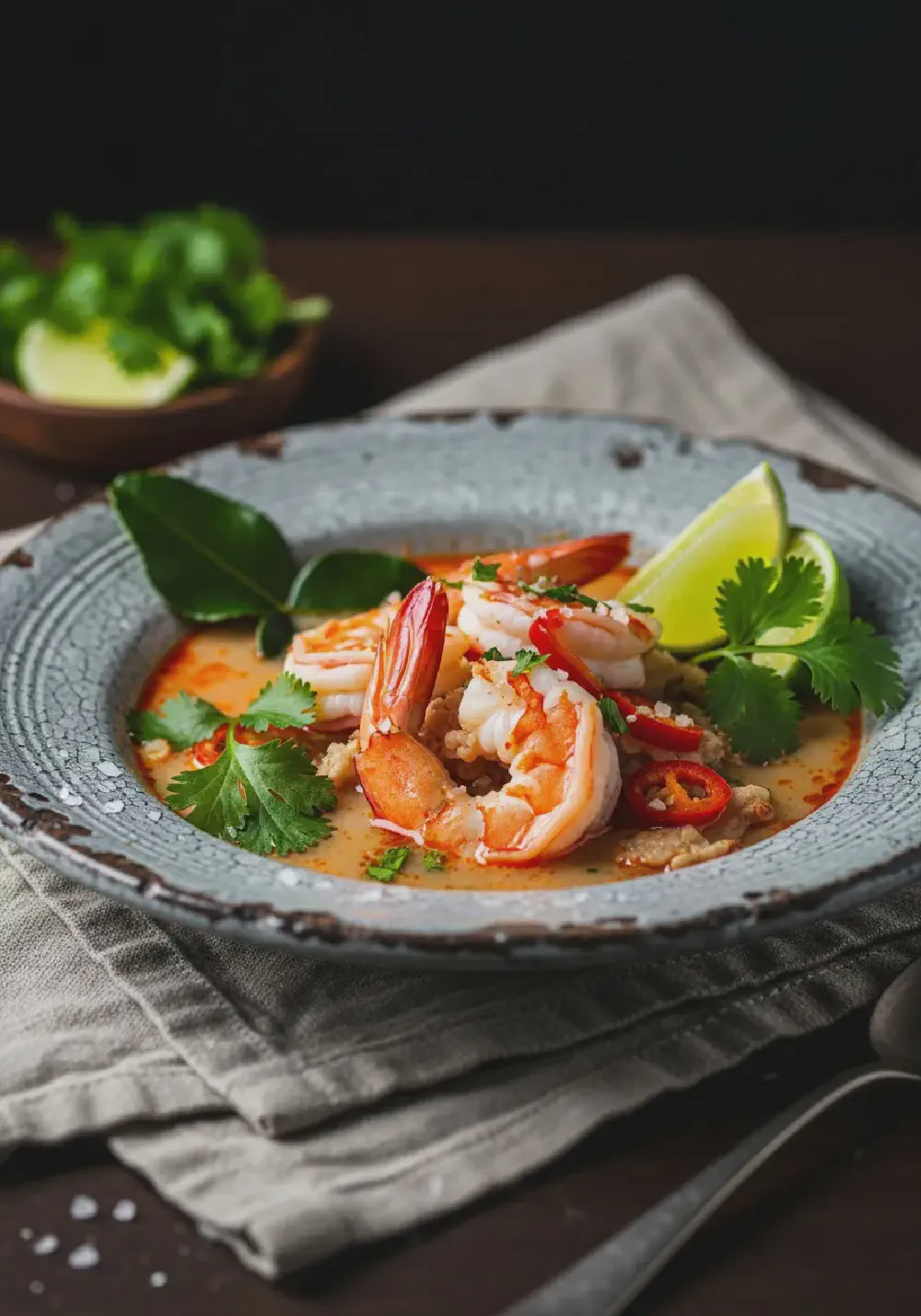
Authentic Tom Yum Goong (Thai Hot and Sour Shrimp Soup)
15M
30M
- Makes 4 servings
- 4 cups seafood or chicken stock
- 2 stalks lemongrass, outer layers removed, bruised and cut into 2-inch pieces
- 5 thin slices galangal
- 5 kaffir lime leaves, torn
- 3-5 bird's eye chilies, smashed
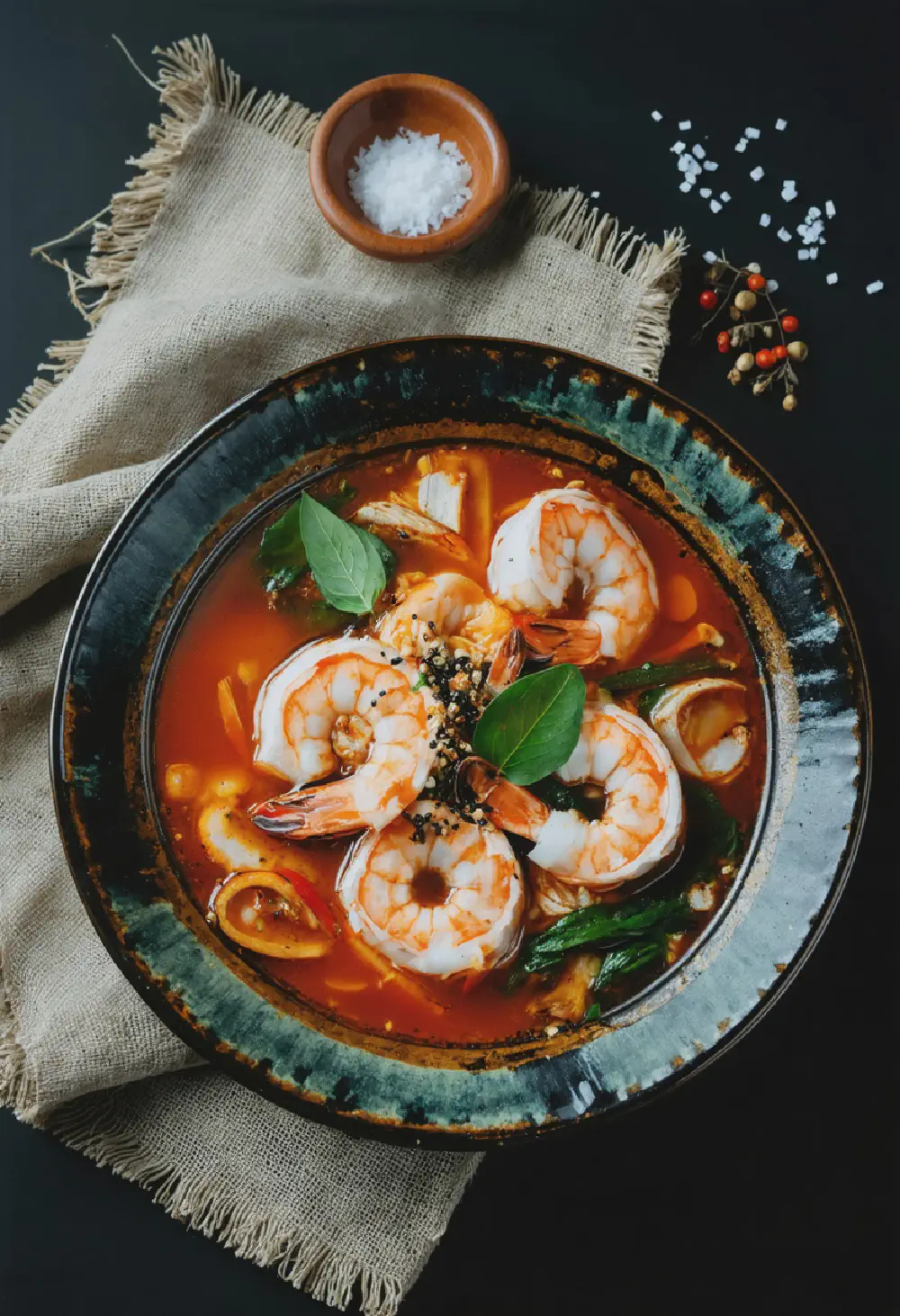
- 8 oz medium shrimp, peeled and deveined
- 1 cup straw mushrooms, drained and halved
- 10 cherry tomatoes, halved
- 3 tablespoons fish sauce
- 3 tablespoons fresh lime juice
- 2 tablespoons roasted chili paste (nam prik pao), optional for depth
- Fresh cilantro leaves and Thai basil for garnish
- In a large pot, bring the stock to a boil over medium-high heat. Add lemongrass, galangal, kaffir lime leaves, and bird's eye chilies. Simmer for 5-7 minutes to infuse flavors.
- Add straw mushrooms and cherry tomatoes. Cook for 2-3 minutes until mushrooms soften.
- Stir in shrimp and roasted chili paste (if using). Cook until shrimp turn pink and opaque, about 2-3 minutes.
- Remove from heat. Stir in fish sauce and lime juice. Taste and adjust seasoning for balance of spicy, sour, and salty.
- Strain out aromatics if desired, or serve as is. Garnish with cilantro and Thai basil. Serve hot with jasmine rice.
History
The history of Tom Yum Goong, Thailand’s iconic Thai hot and sour shrimp soup, traces back centuries to the central plains of Thailand, where it emerged as a staple in everyday Thai cooking. The name itself reveals its origins: “Tom” means “to boil,” “Yum” refers to a mixed salad-like preparation, and “Goong” simply means “shrimp.” Believed to have roots in ancient Thai fishing communities along the Chao Phraya River, this authentic Tom Yum Goong recipe evolved from simple broths simmered with freshwater prawns and wild herbs. By the Ayutthaya period (14th-18th centuries), it gained prominence in royal courts, incorporating exotic ingredients like lemongrass and galangal traded via ancient Silk Road routes. Today, Tom Yum Goong remains a testament to Thailand’s culinary heritage, blending indigenous flavors with influences from Laos and Cambodia, and it’s recognized by UNESCO as part of Thailand’s intangible cultural heritage.
Taste Profile
Tom Yum Goong delivers an explosive taste profile that perfectly captures the essence of Thai hot and sour shrimp soup. This symphony of flavors starts with a fiery heat from fresh Thai chilies, balanced by the sharp, zesty sourness of lime juice and tamarind. Aromatic herbs like lemongrass, galangal, and kaffir lime leaves infuse the broth with citrusy, earthy notes, while plump shrimp add a subtle sweetness and briny umami from fish sauce. The result? A bold, layered experience—spicy, sour, salty, and slightly sweet—that dances on your palate. Often described as “the perfect storm of Thai flavors,” authentic Tom Yum Goong offers a refreshing yet intense profile, making it ideal for those craving restaurant-quality Thai soup without the wait.
Cultural Significance
In Thai cuisine, Tom Yum Goong holds profound cultural significance as more than just a soup—it’s a symbol of balance, harmony, and hospitality. Rooted in Buddhist principles, its five key tastes (sweet, sour, salty, bitter, and spicy) mirror the Thai philosophy of life’s equilibrium, often served to restore health and vitality during monsoon seasons. A beloved street food in Bangkok’s night markets and a fixture in home kitchens nationwide, Thai hot and sour shrimp soup embodies “gin jay yen” (eat cool, live cool), promoting communal dining and wellness. Globally, it has elevated Thai gastronomy, appearing in Michelin-starred restaurants and fostering cultural exchange—proving why authentic Tom Yum Goong is Thailand’s most exported dish, uniting flavors, traditions, and people across borders.