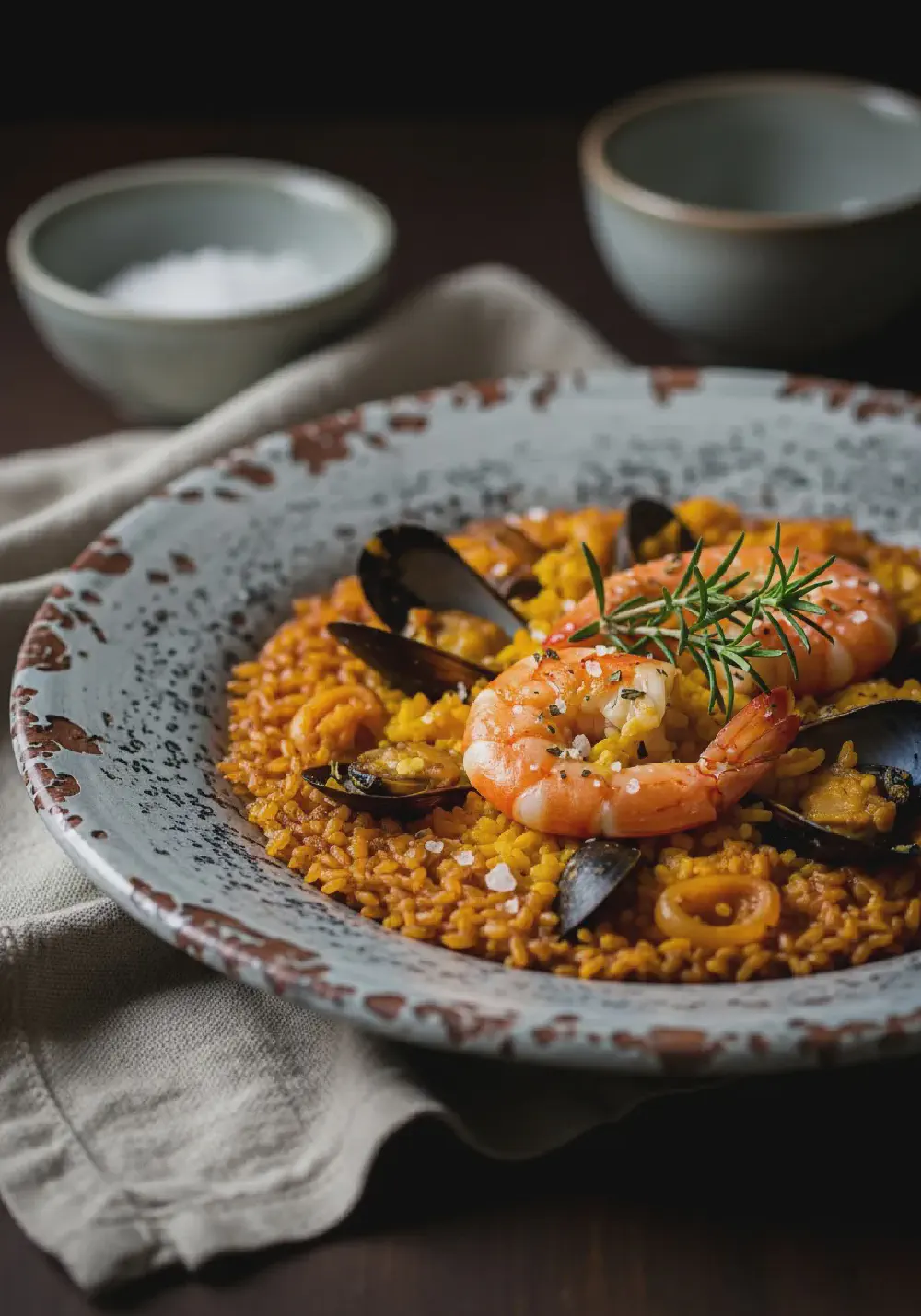
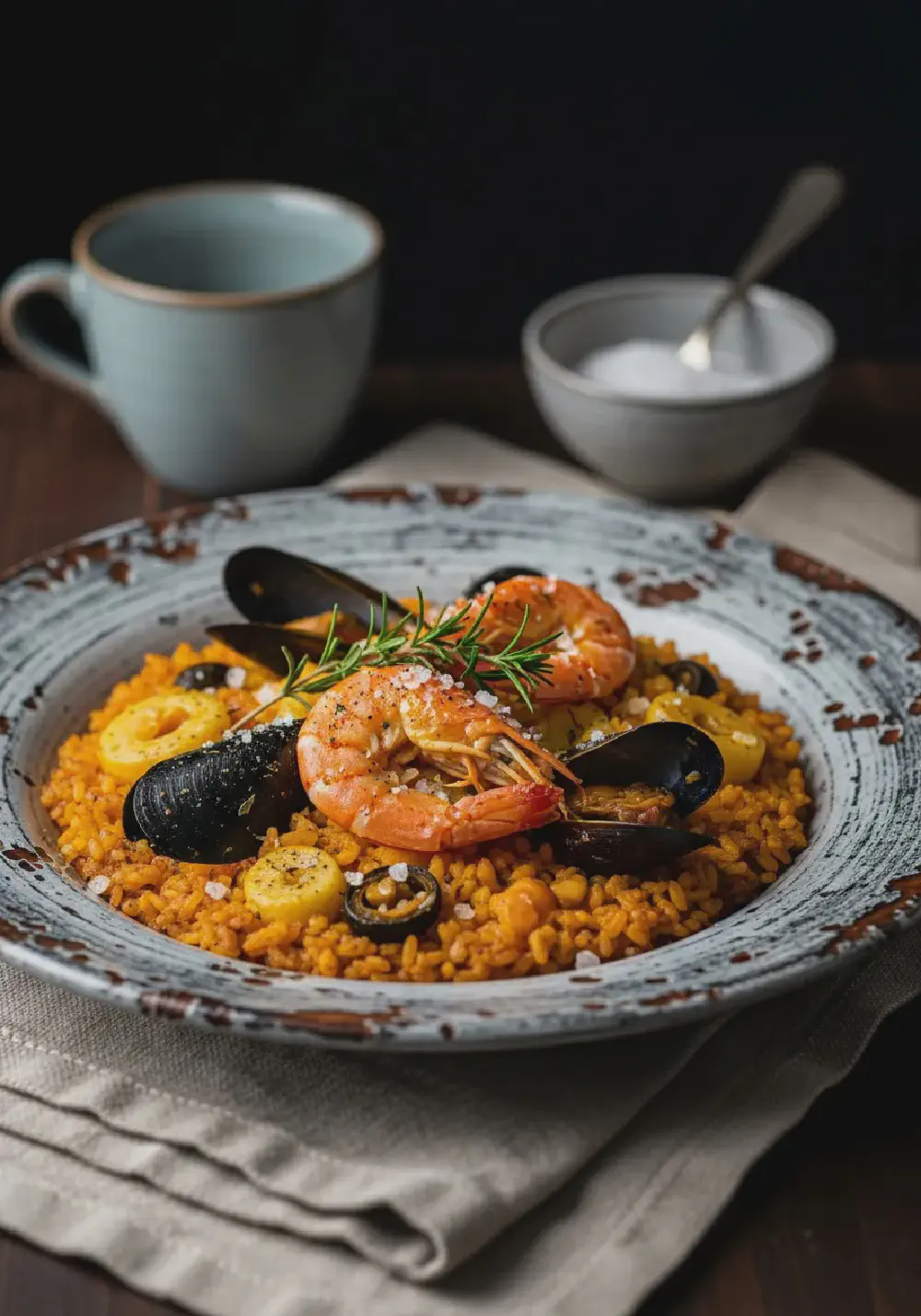
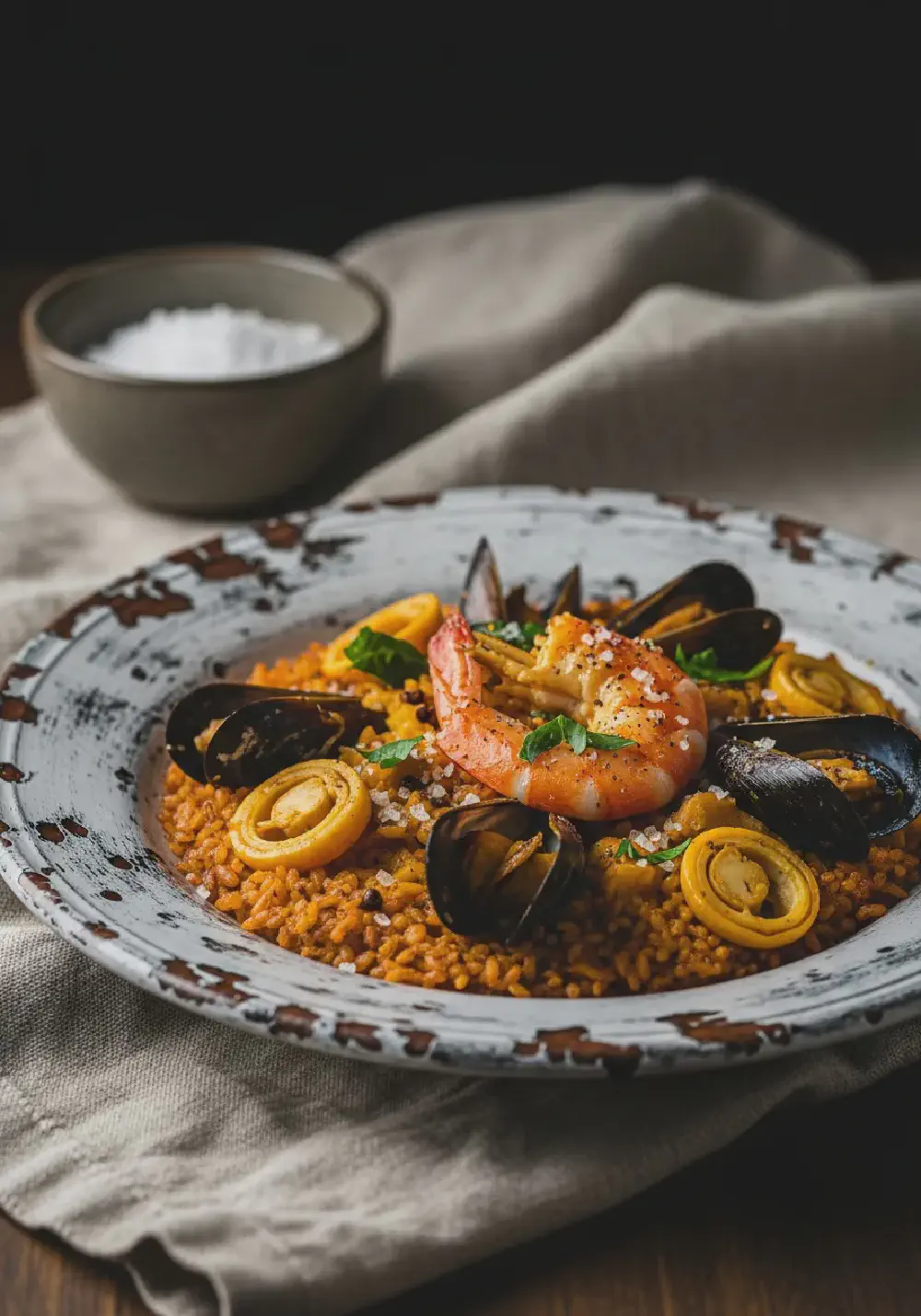
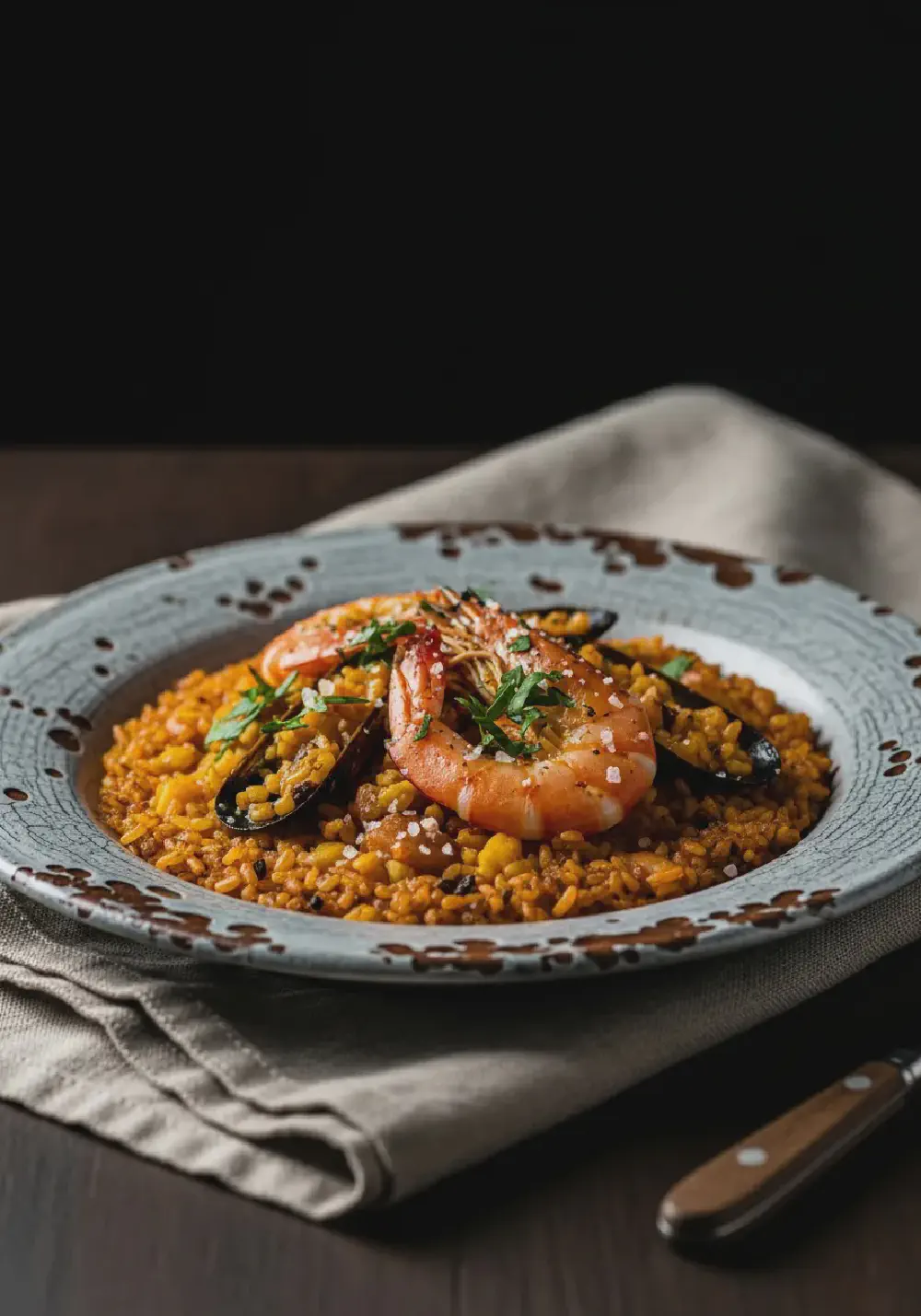
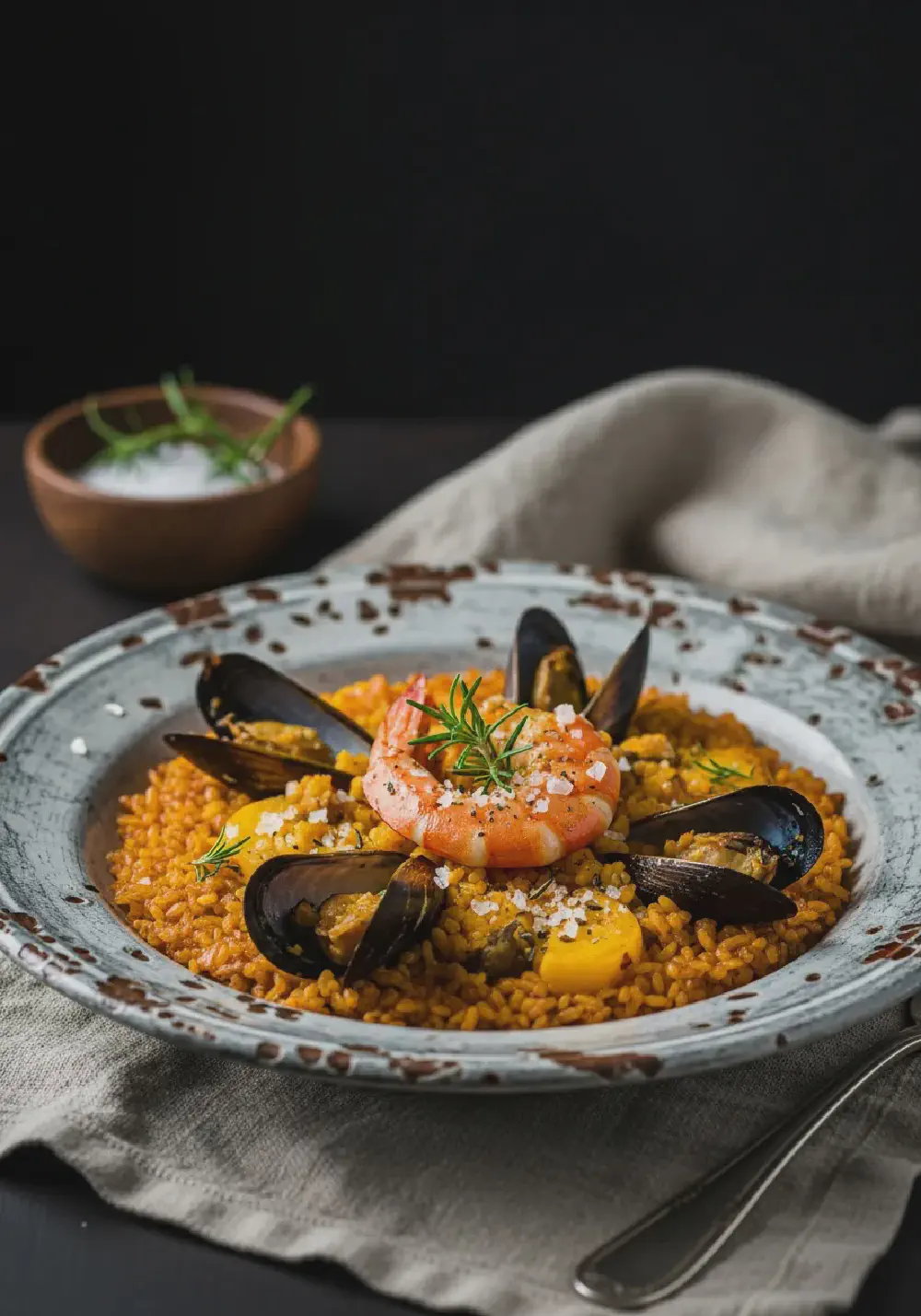
Authentic Spanish Paella Valenciana
30M
1H and 15M
- Makes 6 servings
- 1/4 cup extra-virgin olive oil
- 1 lb chicken thighs, cut into pieces
- 1 lb rabbit, cut into pieces
- 1 medium onion, finely chopped
- 3 garlic cloves, minced
- 2 ripe tomatoes, grated
- 1 red bell pepper, sliced
- 1 green bell pepper, sliced
- 1 cup fresh green beans (judía verde), trimmed
- 1 cup garrofó beans (or butter beans)
- 2 artichoke hearts, quartered (fresh or canned)
- 2 1/2 cups bomba rice (or short-grain paella rice)
- 1 tsp sweet paprika
- 1 pinch saffron threads, toasted
- 6 cups chicken or vegetable broth, heated
- Salt to taste
- 1 sprig fresh rosemary
- Lemon wedges for serving
- In a large paella pan or wide skillet, heat the olive oil over medium-high heat. Season the chicken and rabbit pieces with salt and brown them on all sides, about 5-7 minutes. Remove and set aside.
- In the same pan, add the onion and garlic, sautéing until softened, about 3 minutes. Stir in the grated tomatoes, red and green bell peppers, green beans, garrofó beans, and artichokes. Cook for 5 minutes until vegetables soften.
- Sprinkle in the paprika and saffron, stirring for 1 minute to release the aromas. Return the browned chicken and rabbit to the pan, mixing well.
- Add the bomba rice, stirring to coat it evenly with the oils and flavors, about 2 minutes.
- Pour in the hot broth, add the rosemary sprig, and bring to a boil. Reduce heat to medium-low, season with salt, and simmer without stirring for 10 minutes.
- Continue cooking for another 8-10 minutes until the rice is almost tender and most liquid is absorbed. The bottom should form a light crust (socarrat).
- Remove from heat, cover with a clean towel or foil, and let rest for 5 minutes. Serve with lemon wedges.
History
The Authentic Spanish Paella Valenciana traces its roots back to the Valencia region of Spain, where it emerged in the mid-15th century among rural farmers and laborers. Originating from the fertile lands around the Albufera Natural Park, this dish was born out of necessity and resourcefulness, using locally sourced ingredients like bomba rice grown in the lagoon’s paddies, along with game meats such as rabbit and chicken, and seasonal vegetables. The name “paella” derives from the Latin word “patella,” referring to the wide, shallow pan used for cooking over an open fire. Saffron, a prized spice introduced via Moorish influences during the Islamic rule of Spain, became a hallmark ingredient, infusing the rice with its golden hue and subtle aroma. Over centuries, Paella Valenciana evolved from a humble field meal shared among workers to a celebrated staple of Spanish cuisine, gaining international fame in the 20th century through tourism and cultural exchanges. Today, it’s protected by Valencian traditions, with purists insisting on its original form to preserve authenticity.
Taste Profile
Authentic Spanish Paella Valenciana delivers a symphony of savory, earthy flavors that capture the essence of Mediterranean simplicity. The star is the saffron-infused bomba rice, which absorbs a rich broth made from tender chicken and rabbit, resulting in a slightly chewy texture with bursts of umami. Fresh vegetables like green beans, artichokes, and tomatoes add a crisp, mildly sweet contrast, while rosemary and paprika provide subtle herbal and smoky notes. The dish’s crowning glory is the socarrat—the caramelized, crispy rice layer at the bottom—offering a delightful crunch that ties together the tender proteins and vibrant veggies. Overall, expect a balanced, aromatic profile that’s hearty yet light, with saffron’s floral earthiness lingering on the palate, making it an ideal comfort food for any occasion.
Cultural Significance
In Spanish cuisine, Authentic Spanish Paella Valenciana holds profound cultural importance as a symbol of communal harmony and regional pride, particularly in Valencia where it’s more than just a meal—it’s a ritual. Cooked outdoors over wood fires during festivals like the Fallas or family gatherings, paella embodies the Spanish values of hospitality, sharing, and togetherness, often served directly from the pan to encourage social bonding. As a cornerstone of Valencian identity, it reflects the region’s agricultural heritage and resilience, with strict guidelines from the Paella Valenciana denomination ensuring its purity against modern adaptations. Recognized globally, this dish has influenced Spanish diaspora communities and even earned mentions in UNESCO discussions on intangible cultural heritage. For Spaniards, preparing Paella Valenciana is a rite of passage, fostering generational knowledge and celebrating the land’s bounty, making it an enduring emblem of Spain’s vibrant culinary soul.