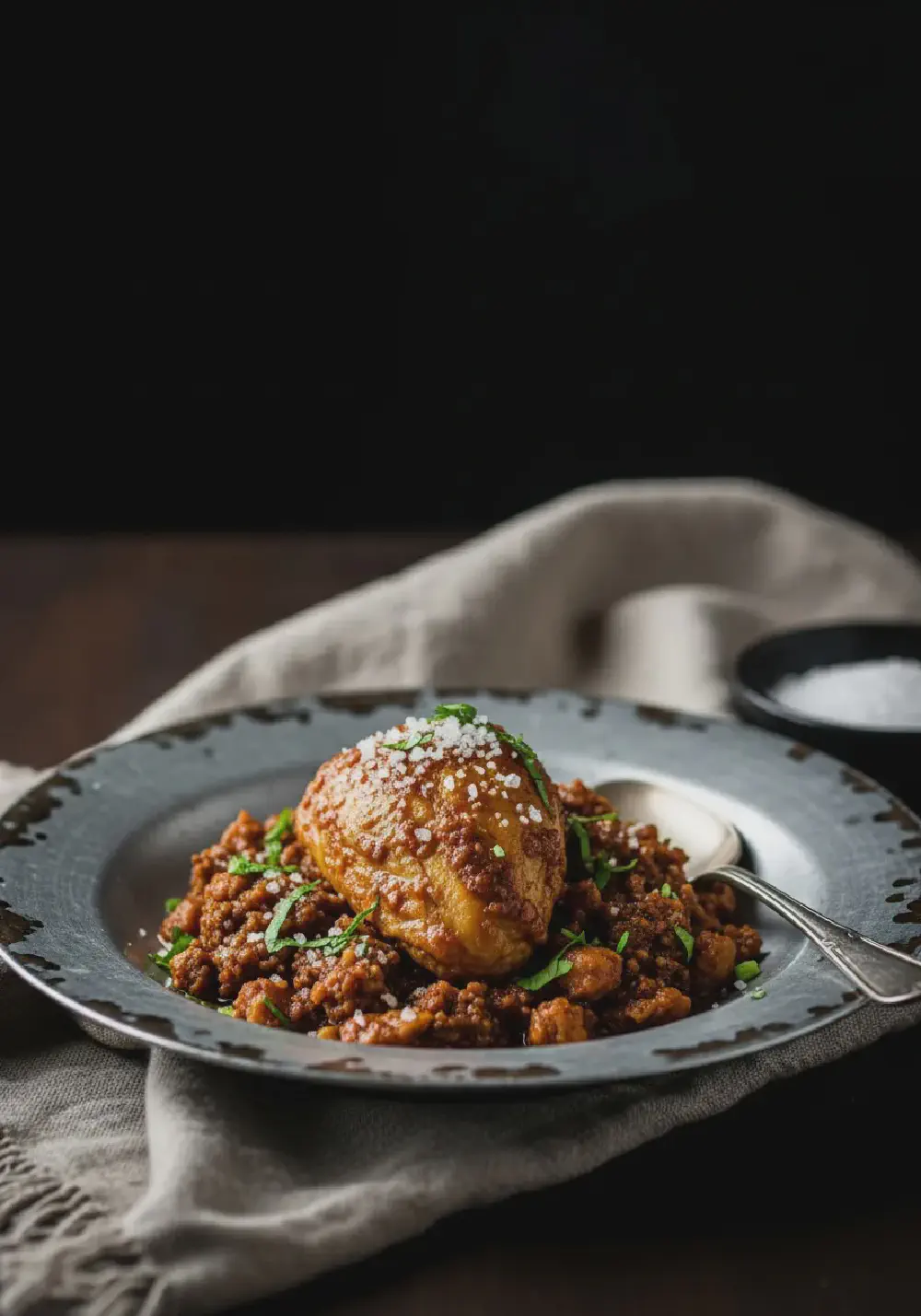
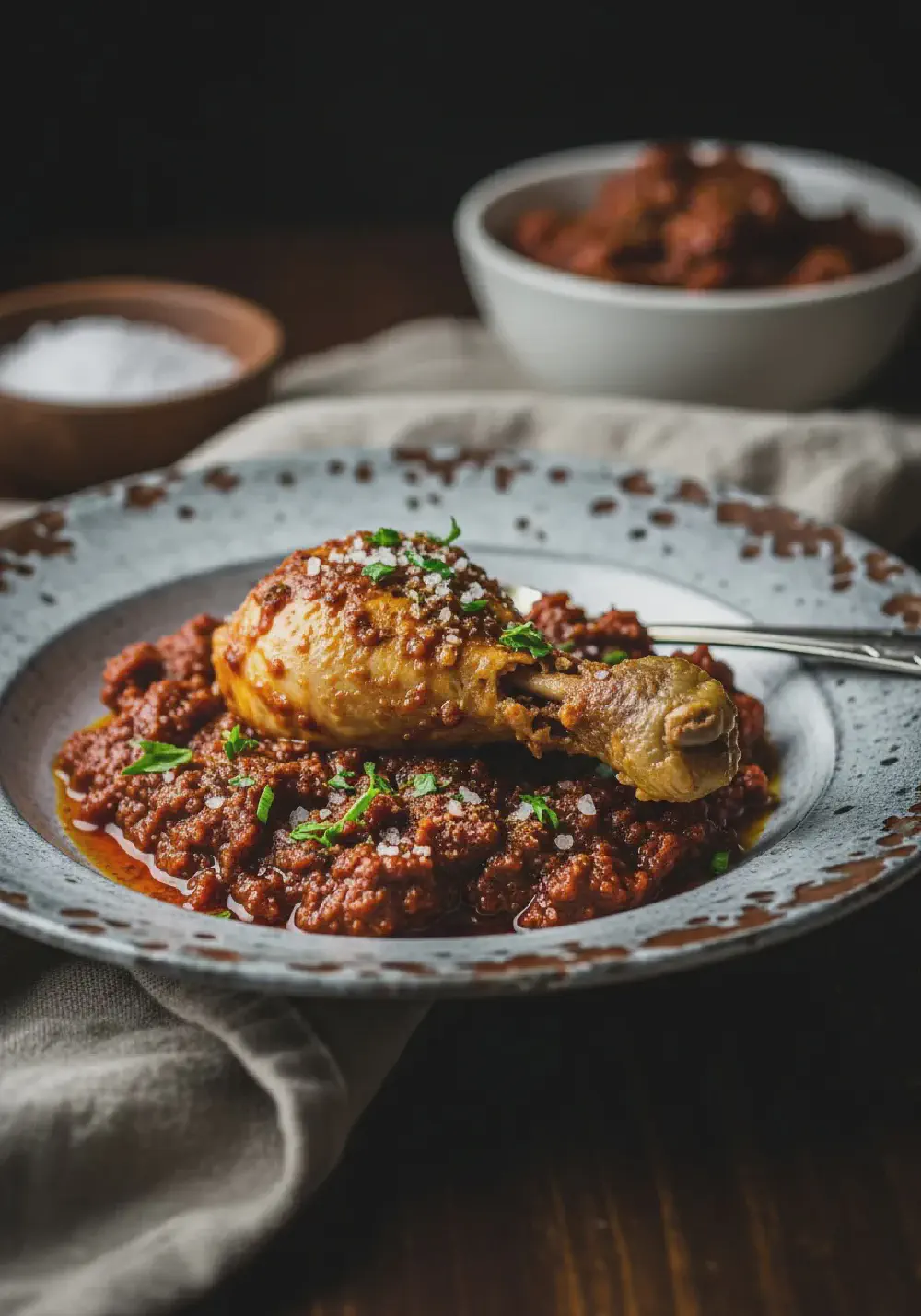
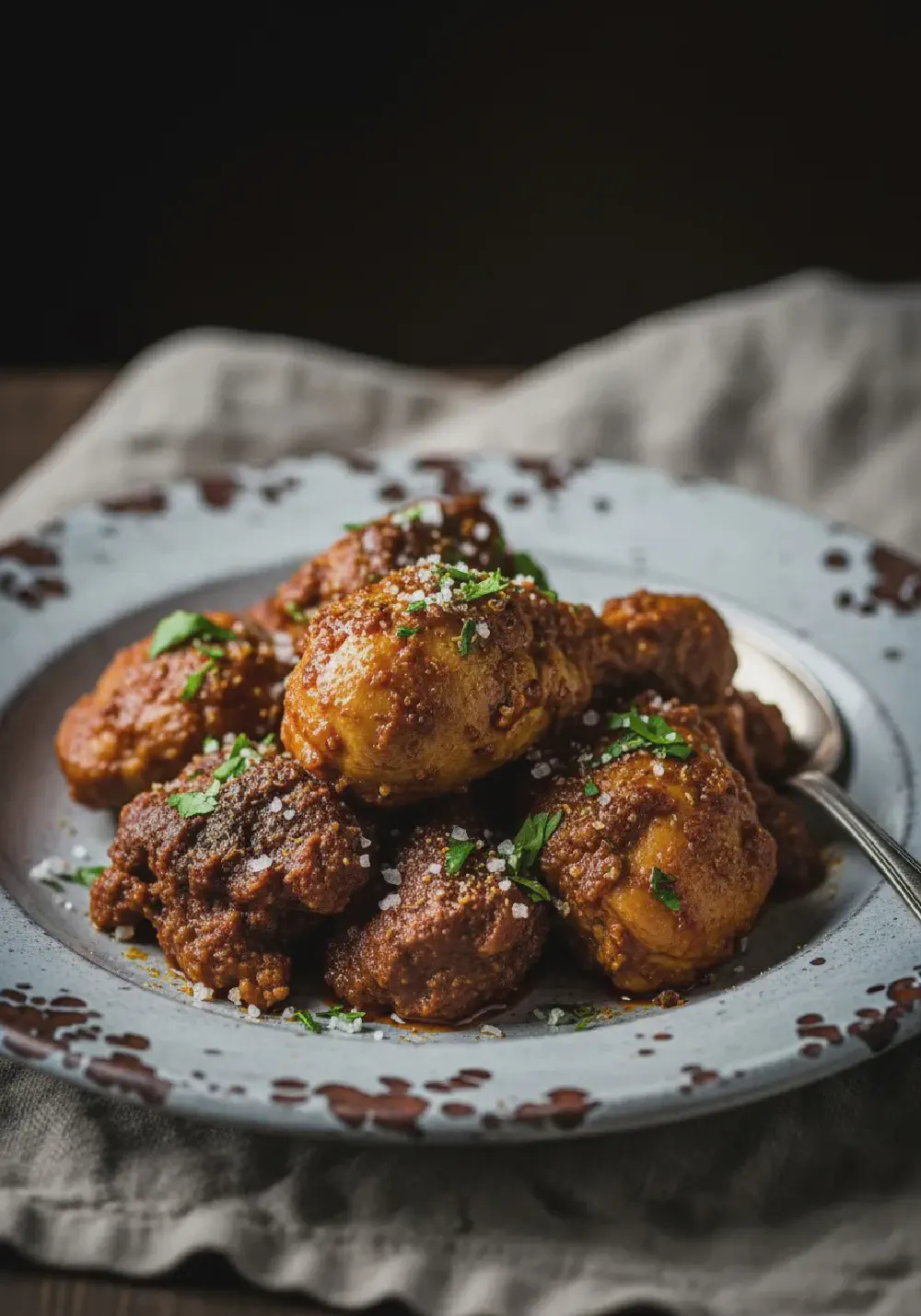
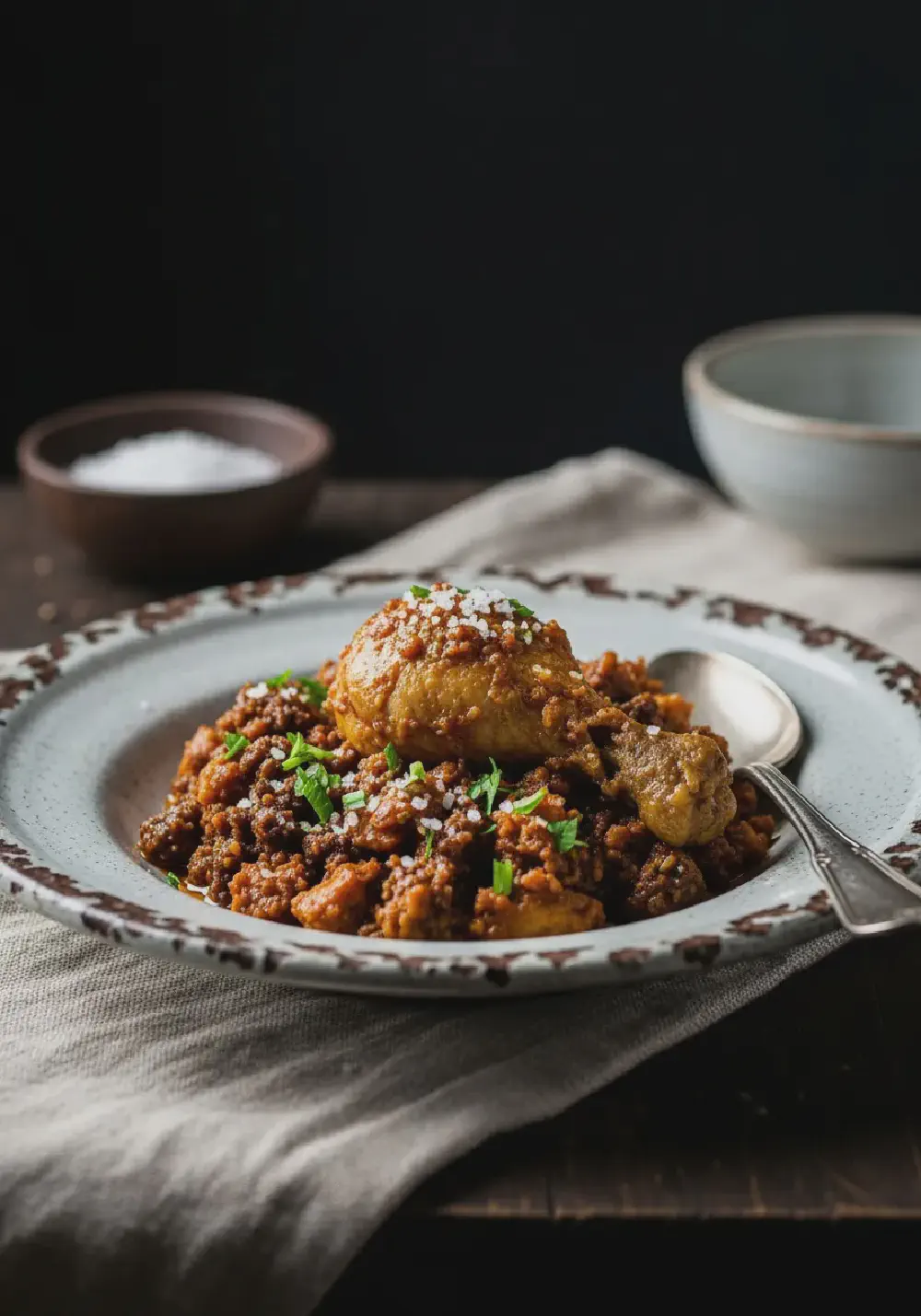
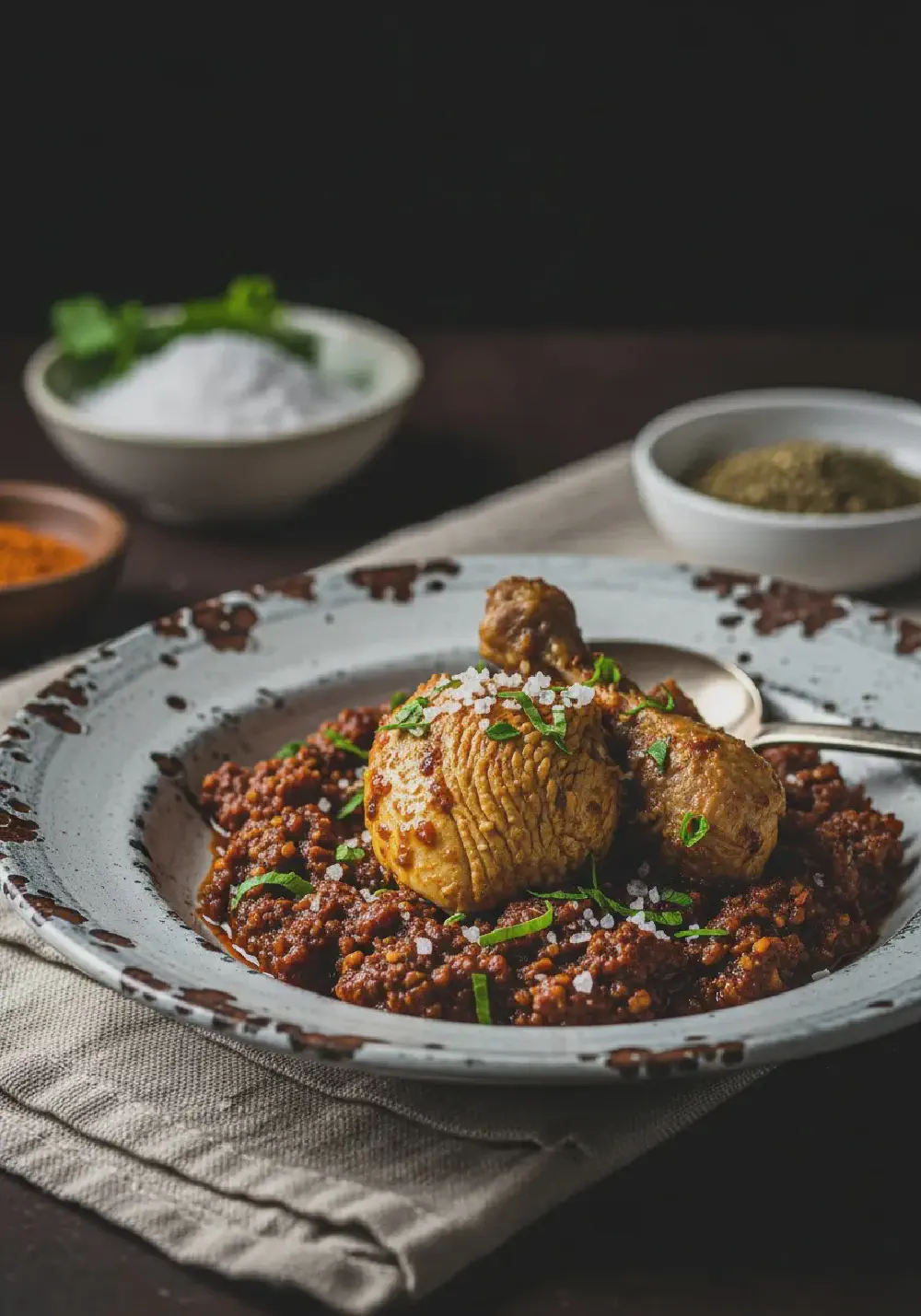
Authentic Doro Wat (Ethiopian Chicken Stew)
20M
1H and 50M
- Makes 4 servings
- 2 lbs chicken drumsticks or thighs, skin-on, bone-in, cut into serving pieces
- 2 large yellow onions, finely pureed or grated (about 3 cups puree)
- 4 cloves garlic, minced
- 1-inch fresh ginger, grated
- 1/4 cup niter kibbeh (Ethiopian clarified butter) or ghee
- 3-4 tablespoons berbere spice blend (authentic Ethiopian spice mix)
- 2 cups water
- 4 large eggs
- 1 teaspoon salt, or to taste
- Fresh cilantro or parsley for garnish (optional)
- Place eggs in a pot, cover with water, bring to a boil, and cook for 10 minutes. Cool in ice water, peel, and gently score the surface with a knife. Set aside.
- In a large heavy pot or Dutch oven, heat niter kibbeh over medium heat. Add pureed onions and cook, stirring frequently, for 20-30 minutes until deeply caramelized and reduced to a thick paste (this is key for authentic flavor).
- Stir in minced garlic, grated ginger, and berbere spice. Cook for 2-3 minutes until fragrant and the spices toast without burning.
- Add chicken pieces, season with salt, and brown on all sides for 5-7 minutes, coating them in the spice mixture.
- Pour in 2 cups of water, stir to combine, scraping up any browned bits. Bring to a simmer, cover partially, and cook for 45-60 minutes until chicken is tender and sauce thickens.
- Nestle the scored eggs into the sauce, spoon sauce over them, and simmer uncovered for 10 more minutes to infuse flavors. Adjust salt and spice if needed.
- Serve hot with injera or rice, garnished with cilantro if desired. Enjoy the authentic heat!
History
Doro Wat, the iconic Ethiopian chicken stew, traces its roots back thousands of years to the ancient Aksumite Empire in Ethiopia, where spice trade routes introduced bold flavors from across Africa and the Middle East. The name “Doro Wat” translates to “chicken stew” in Amharic—“doro” for chicken and “wat” for stew—making it a cornerstone of Ethiopian culinary tradition. Evolving through centuries of Coptic Christian influence, which emphasizes fasting and meatless days, Doro Wat became a celebratory dish reserved for non-fasting periods. Its signature berbere spice blend, a fiery mix of chili peppers, fenugreek, and aromatic herbs, was perfected in Ethiopian kitchens, reflecting the country’s role as a crossroads of ancient commerce. Today, authentic Doro Wat remains a testament to Ethiopia’s enduring food heritage, slow-simmered to perfection much like it was in royal feasts of the past.
Taste Profile
Authentic Doro Wat delivers an explosive taste profile that’s boldly spicy, deeply savory, and irresistibly aromatic—earning its reputation as one of the hottest dishes in Ethiopian cuisine. The slow-caramelized onions form a thick, velvety base infused with berbere’s complex heat from chilies, garlic, ginger, and cardamom, balanced by the tender, juicy chicken that absorbs every layer of flavor. Hard-boiled eggs add a creamy, protein-rich contrast, soaking up the rich, reddish sauce for an umami punch. Expect earthiness from fenugreek, subtle sweetness from the onions, and a lingering fiery kick that builds with each bite. Paired with tangy injera, this Ethiopian chicken stew offers a symphony of bold, warming spices that’s spicy yet harmonious, perfect for spice lovers seeking an authentic flavor adventure.
Cultural Significance
In Ethiopian cuisine, Doro Wat holds profound cultural significance as the “king of stews,” symbolizing hospitality, community, and celebration. Communally served on a large injera platter for “gored gored” style sharing—eaten with the right hand—this dish fosters family bonds during Sunday lunches, weddings, and festivals like Timkat or Meskel. It embodies Ethiopia’s Orthodox Christian traditions, appearing on non-fasting days as a luxurious treat amid frequent meatless periods. Berbere-spiced Doro Wat reflects national pride in indigenous spices and resilience, even sustaining communities during historical challenges. For Ethiopians worldwide, it’s more than food—it’s a flavorful link to heritage, often the star of diaspora gatherings, inviting newcomers to partake in this vibrant, hand-to-heart culinary ritual.